

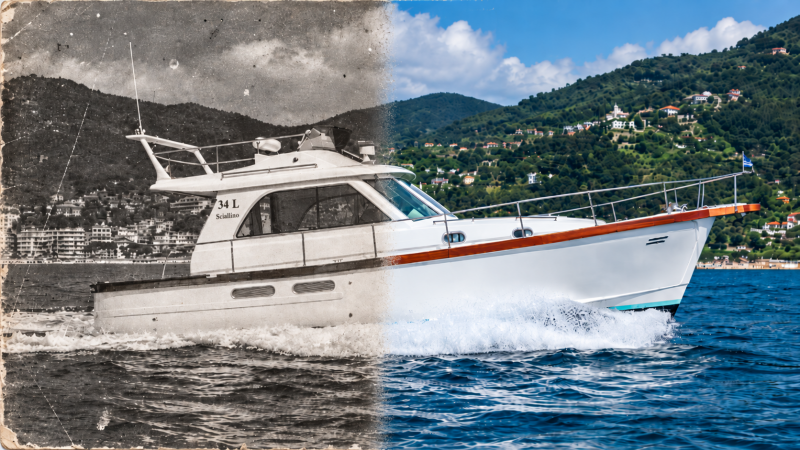
When a new yacht is launched, it is fairly easy to judge whether it is harmonious, well-proportioned or innovative. The harder and more important question is how it will look to us in twenty or thirty years. Will today’s progressive design become a caricature of its era? Will something that once caused disbelief become so ordinary that we forget how radical it was?
Before answering, it is worth remembering that every design language we now call classic was once new, or at least a new interpretation of something that came before. The mahogany runabout, the Mediterranean navetta and the fishing gozzo each have their own history of invention and evolution. Some became classics because they broke with convention. Others because they perfected an existing idea. What we call tradition today is often the result of both.
I find three boats particularly interesting in this context: the Wallypower 118, the Riva Aquarama and Sanlorenzo’s newly launched SHE. The first represents anticipation, the second continuity, and the third return.
Anticipation
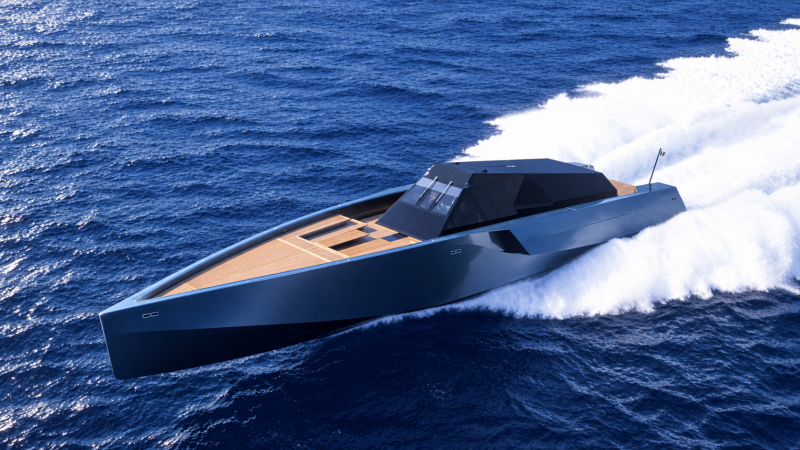
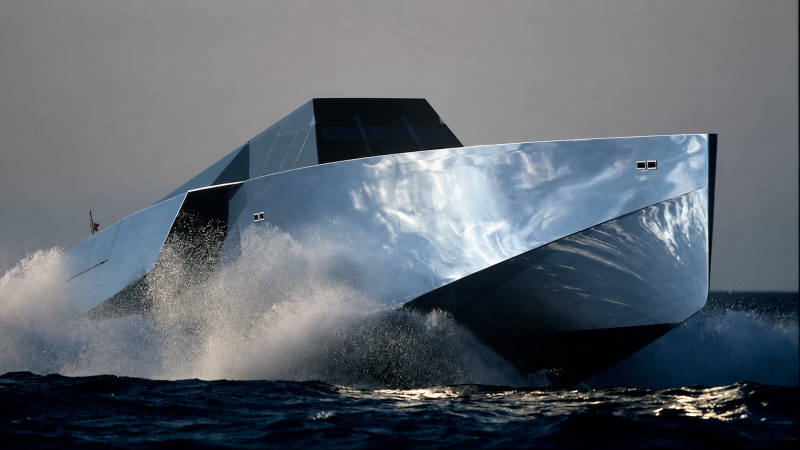
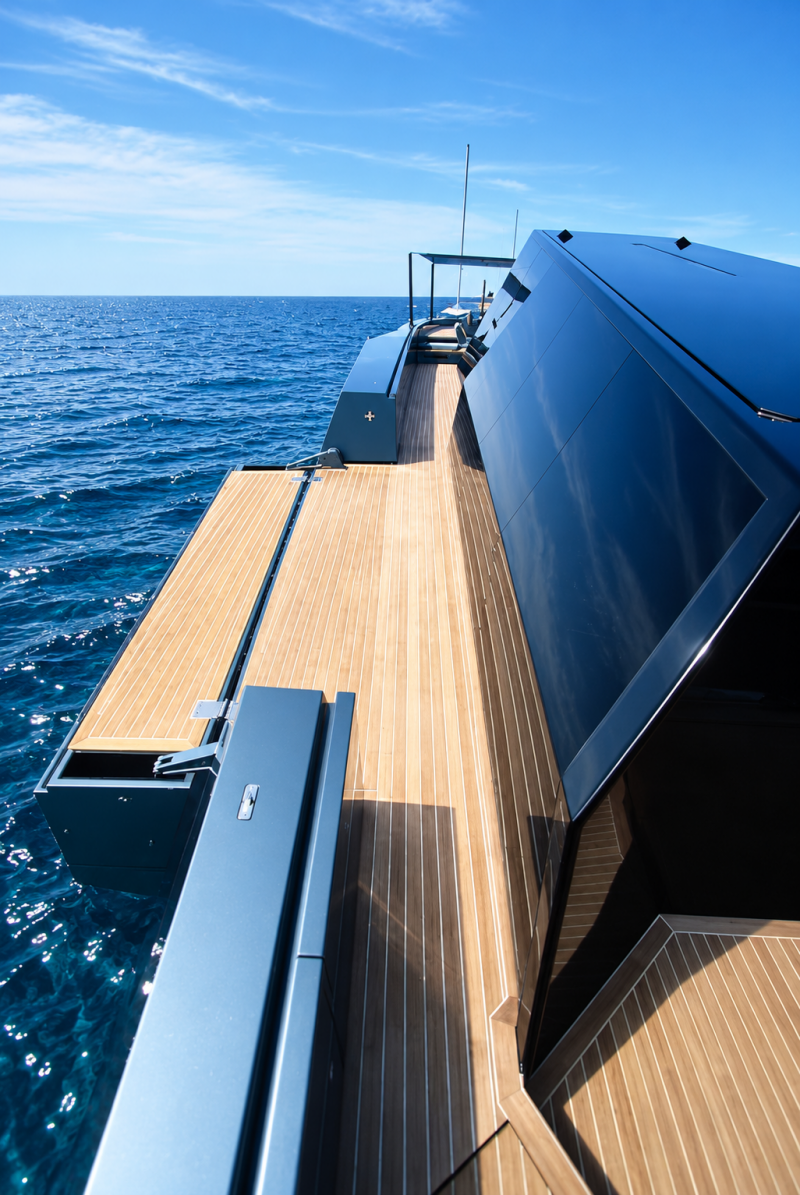
When the Wallypower 118 appeared at the start of this century, it did not look like an evolution of the motor yacht. It looked as though someone had ignored the existing design vocabulary and started writing a new one. Developed by Luca Bassani and Wally with a team that included Lazzarini Pickering and the Intermarine yard, it treated the boat as a single architectural volume rather than a sum of traditional parts: a vertical, knife-like bow, large clean surfaces and a dark glazed superstructure closer to stealth architecture than to a deckhouse.
Today the most interesting thing about it is that it no longer looks strange. The boat hasn’t changed; everything after it has. Vertical bows, large glazed surfaces and fold-down side decks are now common across the industry, so common that we no longer see them as innovation. That may be the highest compliment a design can receive. Most futuristic concepts stay trapped in a future that never happened. The Wallypower anticipated a language that others would later speak.
Continuity
If the Wallypower represents rupture, Riva represents something different: the ability to take an existing design language, perfect it and preserve its identity across generations.
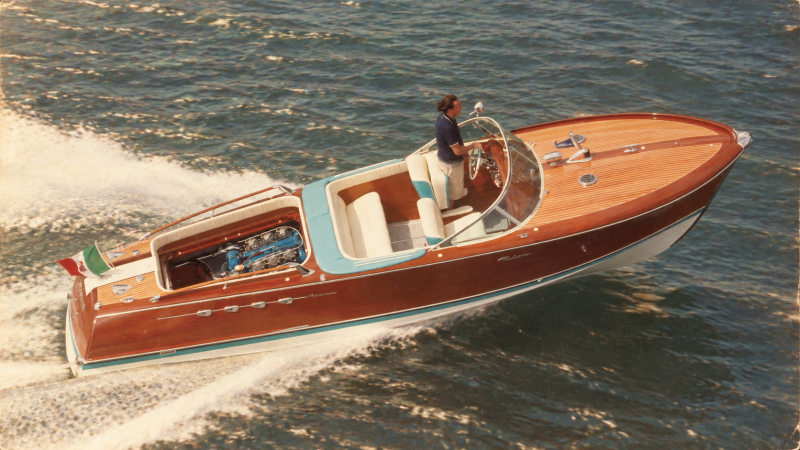
Carlo Riva did not invent the mahogany runabout. American builders such as Chris-Craft had established much of its visual vocabulary decades earlier, and their influence can be seen in Riva’s early models. The Aquarama, introduced in 1962, was itself an evolution of the earlier Tritone. Its achievement was not to invent a new type of boat, but to bring an existing idea to an extraordinary level of refinement.
With its gleaming mahogany, long elegant sides and distinctive wraparound windscreen, the Aquarama became a symbol of Italian luxury far beyond yachting. What began as an interpretation of an established American concept evolved into something unmistakably Italian.
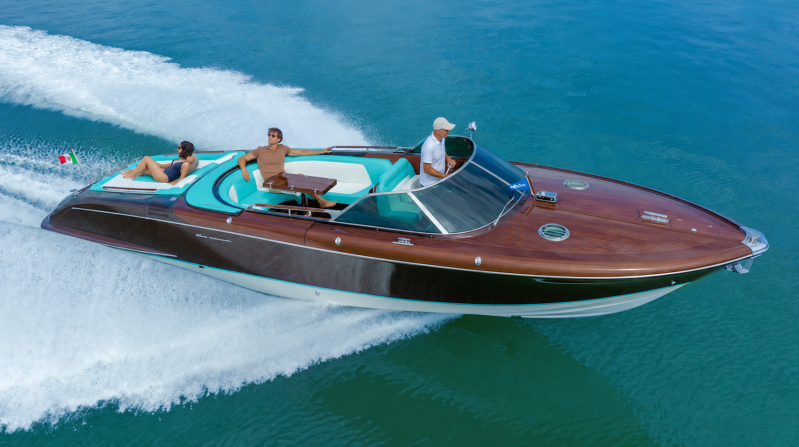
Riva doesn’t need to build replicas of a 1962 boat to keep that idea alive. The Aquariva carries the Aquarama’s codes into a technologically contemporary vessel. This is the difference between tradition and nostalgia: nostalgia tries to reproduce the past, while tradition carries its values into the future. Materials, construction and propulsion must change. The feeling can remain.
Making something new that looks new is easy. Making something new that immediately belongs to a decades-old family takes far greater discipline.
Return
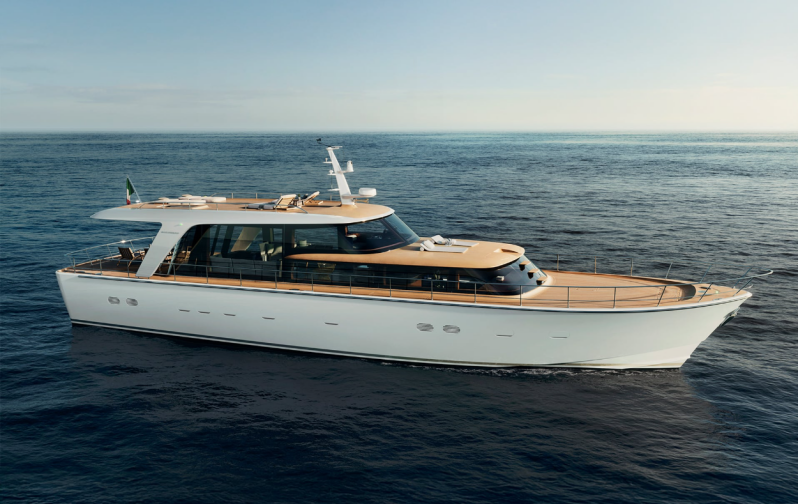
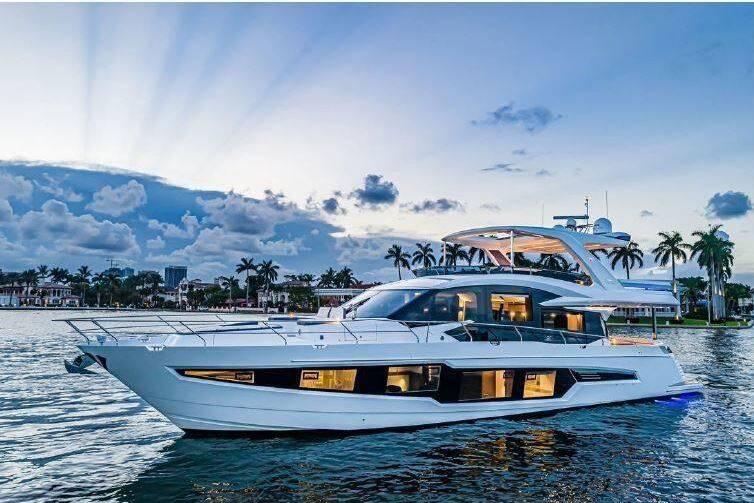
The third case looks, at first glance, like a step backward. Sanlorenzo has just launched SHE, the first model in its Heritage line and a contemporary reinterpretation of the Italian navettas of the 1960s. Designed by Zuccon International Project with interiors by Piero Lissoni, it was launched in Ameglia on 10 July, ahead of its world premiere at this year’s Cannes Yachting Festival.
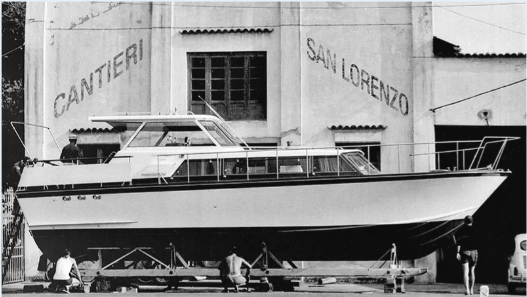
Its profile has no need to look aggressive. It brings back calmer proportions, a softer presence on the water and the language of the golden age of Mediterranean yachting. But those navettas were not “classic” in their own day. They were a new answer to a question: how to live comfortably at sea, not just travel across it.
And SHE is not an old boat. Beneath its retro sensibility is a thoroughly contemporary project. It looks back sixty years while looking ahead technologically.
Why do we assume the future has to look futuristic? After decades of ever more aggressive lines and ever-larger expanses of glass, a quiet yacht can feel fresher than one desperately trying to look as if it came from the future. Sometimes a step back is the radical act, and a way to recover what was lost along the way.
Design Doesn’t Move in a Straight Line
Taken together, the greatest value of these three examples may be that they reject the idea that design must follow a single direction. The Wallypower 118 tried to escape the familiar and set out in a completely new direction. Through the Aquarama and then the Aquariva, Riva showed that the familiar doesn’t need to be abandoned just because it is old. With SHE, Sanlorenzo deliberately turned around to find something that could be valuable again in the present moment.
At first glance, these are three almost opposing approaches. In reality, all three show the same thing: time on its own is not a design criterion. Something new is not necessarily progressive, and something old is not necessarily outdated. A good form doesn’t lose value because it has existed for a long time, and nothing becomes good simply because we haven’t seen it before.
There is also a deeper link between them. Each relates differently to ideas that emerged from earlier moments of change. The Wallypower introduced a genuinely new visual and architectural language. The Aquarama refined an already established concept until it became an icon in its own right. The Mediterranean navetta answered a changing idea of how people wanted to live at sea. Anticipation, continuity and return are three different ways of relating to the moment when a boat’s form begins to mean more than its function, and does it well enough for the idea to outlive its era.
Perhaps that is why the evolution of yacht design resembles a conversation more than a straight line. Ideas appear, disappear, change meaning and return in a different context. What was radical at one moment can become the standard. What seemed outdated can become relevant again. And what looks like the height of modernity today may, in a few years, remain only a signature of the time in which it was made.
The problem begins when that conversation closes in on itself, and design starts responding mainly to other designs instead of to people, the sea and the purpose of the boat.
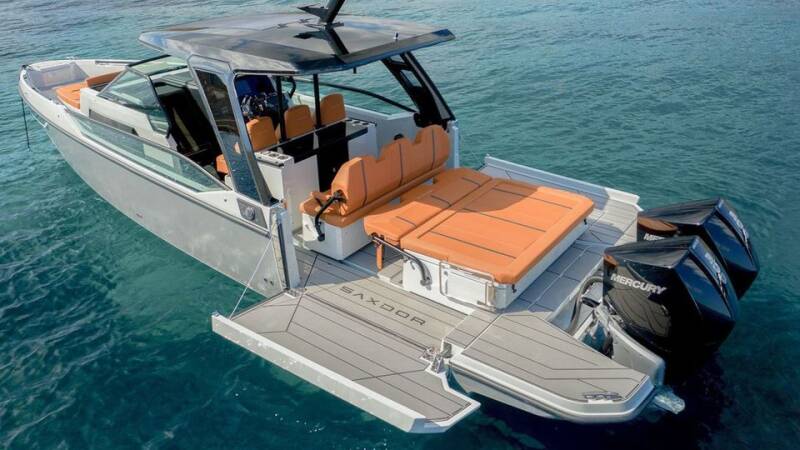
One successful idea then quickly becomes a trend. The trend becomes an expectation, and the expectation becomes a formula. Glass surfaces grow because they grew on the previous model. Terraces widen because the market now expects them. Bow sections become ever sharper and lines ever more tense, not necessarily because that is the best answer to a real need, but because it has become the visual language of the moment.
In a process like that, cause and effect are easily confused.
This is the reverse of how a design revolution happens. A revolution begins when form joins function and gives it a voice. Decline begins when form outlives the function that created it, and a shape that once answered a real need becomes a stylistic element passed from model to model long after its reason for existing has gone.
That is the moment to return to the simplest question. The question is not whether the design looks contemporary enough, or whether it follows the trend closely enough. The question is why the design is the way it is?
The answer to that may matter more than whether a design belongs to the past, the present or the future.
Great design doesn’t have to be born from revolution. It can emerge from evolution, or from the rediscovery of a forgotten idea.
Purpose and Feeling
In yachting this question matters even more, because a vessel, however much it is shaped as a design object, is never only an object.
The sea doesn’t care about trends, and waves don’t know whether lines are modern. Sun, salt, wind, rough-weather passages, docking and life at anchor quickly strip the mask off any design.
A boat has to work. It has to handle well and it has to be safe. It has to let people move around it naturally, suit the way its owner will actually use it, and justify its own architecture. Purpose has to stay at the centre somewhere, or we easily end up with design that exists only to prove that it was designed.
Perhaps that is why the Wallypower 118 is such an important example. Its form was not just a stylistic provocation. Its radicalism was tied to an entirely new way of thinking about space, materials, construction and performance.
Perhaps that is why Riva has been able to keep the Aquarama’s identity alive for decades. Beneath the recognisable aesthetic there has always been a very clear idea of the feeling a boat should give the person at the helm.
And perhaps that is why Sanlorenzo’s SHE makes sense today. It doesn’t try to recreate the past as a stage set. Instead, it takes from the past the qualities that are becoming relevant again: proportion, restraint, durability and calm.
At the end of the story, the human being remains at the centre. We can talk about proportion, function, technology, hydrodynamics and stylistic languages, but almost every relationship with a boat becomes emotional at some point.
Design is not a competition that ends with a single universal solution. Part of its value lies in the fact that one problem can have many different answers. But the best of them share one quality: they don’t exist only to follow what is currently fashionable. Sometimes they anticipate the future, sometimes they defend continuity, and sometimes they turn back. But they always know why they exist.
That may be why good design has no obligation to look like the future. It doesn’t even have an obligation to look new. Its obligation is to make sense.
A boat must first serve the purpose it was created for. It must work well in the world it belongs to, and it must give a person a good relationship with the sea.
If, on top of all that, it is beautifully shaped, if it moves us, and if years later we still turn to watch it pass, then it has gone a big step further.
And if after twenty, thirty or fifty years we can no longer say whether its design belongs to the past, the present or the future, perhaps we have finally reached the rare category that designers so often invoke and so rarely manage to create on purpose.
Timelessness.
R.M.
Add comment
Comments